搜索:

題目:High-temperature oxidation of zirconium alloys in various atmospheres/Hydrogen behavior in Zr alloys/25 years QUENCH program at KIT/Overview on ATF cladding materials with focus on their HT oxidation and degradation
時(shí)間:2025年6月19日 9:00-17:00
地點(diǎn):機(jī)械與動(dòng)力工程學(xué)院 振華會(huì)議室
邀請(qǐng)人:劉彤 教授(核燃料循環(huán)與核材料研究所)
Biography
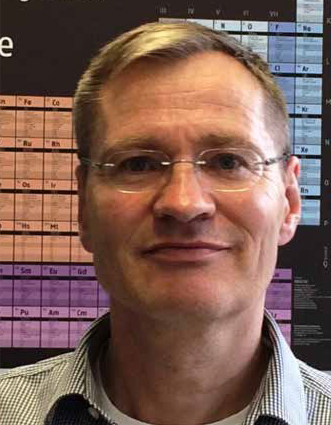
Dr. Martin Steinbrück studied chemistry at the Friedrich Schiller University of Jena and received his Ph.D. in 1990.
After working for two years in a microelectronics company, he joined the Karlsruhe Institute of Technology (formerly Forschungszentrum Karlsruhe FZK) in 1991. Since then, he has worked mainly in the fields of materials science and nuclear safety research. Dr. Steinbrück is head of the High-Temperature Materials Chemistry group at the Institute of Applied Materials. He is Principal Investigator of the QUENCH project dealing with the hydrogen source term and coolability during quenching of an overheated core in the framework of the KIT Nuclear Safety Program. He is particularly interested in materials behavior, oxidation, and nuclear component interactions at high temperatures. In recent years, Dr. Steinbrück has focused on accident tolerant fuel (ATF) cladding materials.
Dr. Steinbrück has published more than 170 papers cited in Scopus with an H-index of 37 (as of 05/2025). He is the organizer of the annual International QUENCH Workshop
Abstract
《High-temperature oxidation of zirconium alloys in various atmospheres》
Zirconium alloys serve as nuclear fuel cladding. Steam oxidation during accidents generates heat and hydrogen, compromising cladding integrity and fission product containment. This lecture details oxidation mechanisms, thermodynamics, and kinetics in steam and other atmospheres (e.g., steam-air mixtures, N? from ECCS, inert gases like Ar), reviewing their specific effects.
《Hydrogen behavior in Zr alloys》
Hydrogen forms during zirconium reactions with water and steam under operating and accident conditions. It may release or be absorbed. The lecture describes: 1) operational hydrogen uptake effecting post-operation cladding properties; 2) secondary uptake during DBA LOCA; 3) hydrogen source term in severe accidents and its consequences.
《25 years QUENCH program at KIT 》
Reflooding an overheated core may cause temperature excursions and hydrogen release, as water acts as both cooling and oxidizing agent. QUENCH investigates the hydrogen source term during DBA/BDBA and high-temperature material interactions. Results from 20 large-scale bundle experiments, 7 LOCA tests, separate-effects tests, and modeling are summarized, highlighting main outcomes.
《Overview on ATF cladding materials with focus on their HT oxidation and degradation》
Post-Fukushima, key ATF claddings: Cr-coated Zr alloys (short-term), FeCrAl, SiC CMCs (long-term). Must equal Zr properties in operation and DBA but improve severe-accident HT oxidation resistance to reduce hydrogen and heat release and extend coping time. Lecture discusses pros and cons in operational and accident scenarios, focusing on HT degradation mechanisms and survival temperatures with examples from KIT.




上海交大
機(jī)械動(dòng)力學(xué)院



上海交大
機(jī)動(dòng)本科教務(wù)辦



SJTU機(jī)動(dòng)研教辦



上海交大
機(jī)動(dòng)校友辦



上海交大MEM



SJTUME基礎(chǔ)實(shí)驗(yàn)與創(chuàng)新實(shí)踐



SJTUME錘錘



上海交大
機(jī)動(dòng)研究生會(huì)



ME微紅旗



ME礪遠(yuǎn)學(xué)術(shù)



SJTUME職業(yè)發(fā)展中心
 學(xué)院OA系統(tǒng)
 jAccount登錄
 ENGLISH


 地址:上海市東川路800號(hào)上海交通大學(xué)閔行校區(qū)機(jī)械與動(dòng)力工程學(xué)院
 郵編:200240
 Email:sjtume@sjtu.edu.cn